TIRUCHIRAPPALLI, November 14, 2026 — The central government’s flagship rural water program is transitioning from basic pipeline installation to continuous, community-managed service delivery, senior officials announced at the conclusion of the first regional conference on Jal Jeevan Mission (JJM) 2.0 in Tiruchirappalli on Saturday.
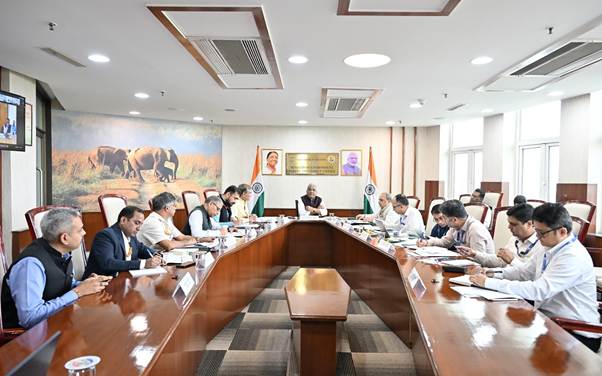
Following a September 2026 departmental summit attended by the Prime Minister, delegates from seven States and Union Territories convened for the two-day conference to align administrative reforms and review ground-level progress. While Union Jal Shakti Minister C.R. Patil opened the forum by urging states to finish pending infrastructure and enact structural reforms, the concluding day focused on hands-on field inspections and formal community handovers.
Field Inspections and “Jal Arpan Diwas”
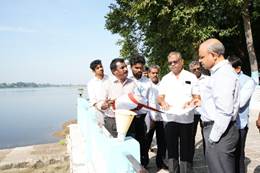
Before the closing plenary, five delegations headed by senior Ministry of Jal Shakti officials—including Department of Drinking Water and Sanitation (DDWS) Secretary Ashok K. K. Meena and National Jal Jeevan Mission (NJJM) Mission Director Kamal Kishore Sohn—toured source-to-tap water facilities across Vadugakudi, Tiruchinampoondi, Thindukarai, Nochiyam, and Keelanbil Headworks.
The officials subsequently attended “Jal Arpan Diwas” ceremonies across five villages: Palamaneri, Ambedkar Nagar, Thirunamnagar, Ayyampalayam, and Puthu Uthamanoor. In Palamaneri, Secretary Meena inspected the historic Grand Anicut (Kallanai) on the Cauvery River and local riverbed collector wells before overseeing the formal transfer of water assets, planning records, and “as-built” maps to the local Gram Panchayat. During the village gathering, women from the Sujalam Shakti self-help group demonstrated water purity checks using field testing kits.
Building Public Trust and Panchayat Capacity
Addressing the closing session, Secretary Meena stressed that asset transfers represent the start of a long-term partnership between state agencies and village councils rather than a mere formality. Outlining a long-term vision for uninterrupted, 24×7 potable tap water, he advised visiting bureaucrats to drink directly from village household taps during inspections to bolster public faith in water safety—a step Mission Director Sohn personally demonstrated during his village tour.
Sohn characterized the handover initiative as a move toward “shared responsibility” for lasting water delivery. He noted that village councils require assurances of steady technical backing from state departments during major equipment breakdowns to confidently operate local networks. Meena similarly called for localized training for elected panchayat members and urged states to deploy decision-support systems for groundwater recharge and rainwater harvesting.
Countdown to the February 2027 National Review
Summarizing the policy roadmap, DDWS Joint Secretary D. Senthil Pandian outlined ongoing inter-ministerial coordination with the ministries of Panchayati Raj, Skill Development, Tribal Affairs, and Rural Development to streamline funding and tribal area coverage. Key reform pillars under JJM 2.0 include:
- Establishing dedicated district technical units and enforcing operation and maintenance (O&M) policies.
- Digitally mapping rural water assets via the Sujalam Bharat platform.
- Empowering Village Water and Sanitation Committees (VWSCs) to oversee daily upkeep and source conservation.
Pandian urged participating states to meet their scheduled reform milestones ahead of a proposed national review in February 2027. The conference concluded with a vote of thanks from NJJM Director Hari Narayanan M., acknowledging the Tamil Nadu government and the TWAD Board for hosting the regional dialogue.
According to an official statement issued by the Press Information Bureau (PIB) on behalf of the Ministry of Jal Shakti.
About The Author