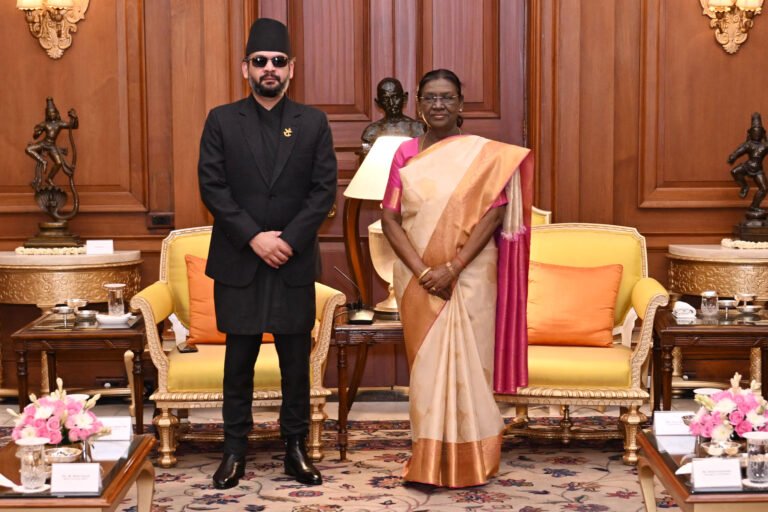
NEW DELHI — India unveiled a comprehensive development package worth 24,000 crore Nepalese rupees alongside major cross-border rail, energy, and trade infrastructure agreements on Monday, November 23, 2026, during Nepalese Prime Minister Balendra Shah’s inaugural bilateral trip to New Delhi.
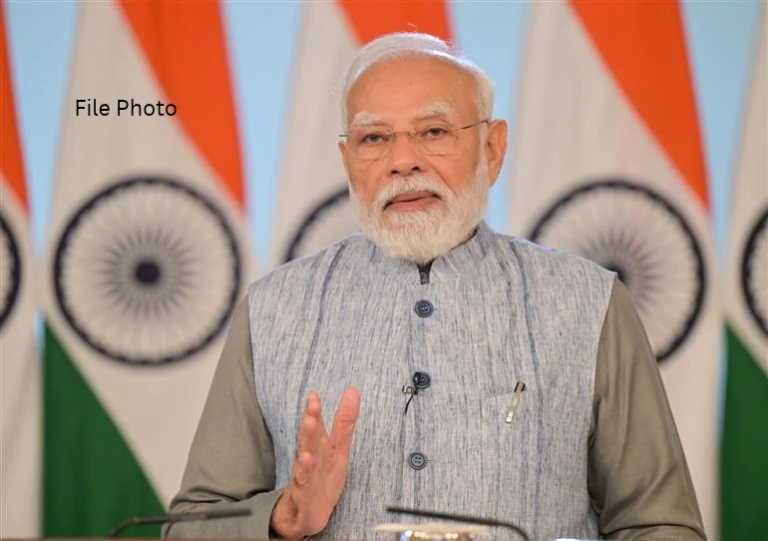
Following bilateral talks, the Indian Prime Minister welcomed Shah—noting his recent appearance at the United Nations as the world’s youngest prime minister and his electoral mandate earlier this year—and outlined a newly released Joint Vision Document. The framework is structured around achieving a “developed India and a prosperous Nepal.”
Flood Relief and Economic Aid
Expressing condolences for fatalities resulting from severe flooding in Nepal this past August, New Delhi committed the NPR 24,000 crore Development Cooperation Package toward post-disaster rebuilding, livelihood restoration, and long-term disaster resilience.
Rail, Road, and Port Connectivity
To boost bilateral commerce and pilgrimage tourism, both leaders launched several transit initiatives:
- Saryu-Kamala Express: A new cross-border rail link designed to connect pilgrims traveling to Ayodhya—which recorded nearly 300 million visitors in 2025 following the 2024 Ram Lalla consecration—with Janakpur in Nepal. Authorities also agreed to improve transit links between Buddhist and Shiva-Shakti religious centers, such as Bodh Gaya and Lumbini.
- Border Infrastructure: The two sides inaugurated the Dharchula road bridge connecting Uttarakhand with Nepal, laid the foundation stone for an integrated check post at Banbasa, and pledged to speed up construction on Nepal’s Dodhara-Chandni Integrated Check Post.
- Maritime Transit: India agreed to grant Nepal transit trade access through the Kandla and Paradip ports, alongside accelerating road and rail links bordering Bihar and Uttar Pradesh.
Highlighting cultural bonds during his remarks, the Indian Prime Minister recalled his 2018 address in Janakpur, stating: “Without Nepal, our holy shrines are incomplete; without Nepal, our Ram is also incomplete.”
Hydropower and Fuel Supply
In the energy sector, the leaders laid the foundation stone for the Lower Arun Hydroelectric Project and reaffirmed timelines for finishing the Arun-3 project to supply clean power to the Indian market. On petroleum infrastructure, Phase Two of the Motihari-Amlekhganj Pipeline was inaugurated alongside foundation-laying for the Jhapa Petroleum Terminal, building on New Delhi’s continued supply of fuel and fertilizers despite global oil disruptions this year.
Education, Startups, and Youth Initiatives
Aiming to expand opportunities for young professionals and students, India announced plans to set up an offshore Indian Institute of Technology (IIT) campus, an Innovation Hub, and a Start-up Incubator in Nepal. Additional commitments include:
- Expanding scholarships in technology and law for Nepalese students studying in India.
- Supporting the construction of an Agro-Industrial Park in Nepal to bolster food processing.
- Expanding cricket infrastructure and athlete training programs in Nepal, as well as hosting a Nepalese delegation of digital creators at the upcoming WAVES Summit.
PIB
About The Author